
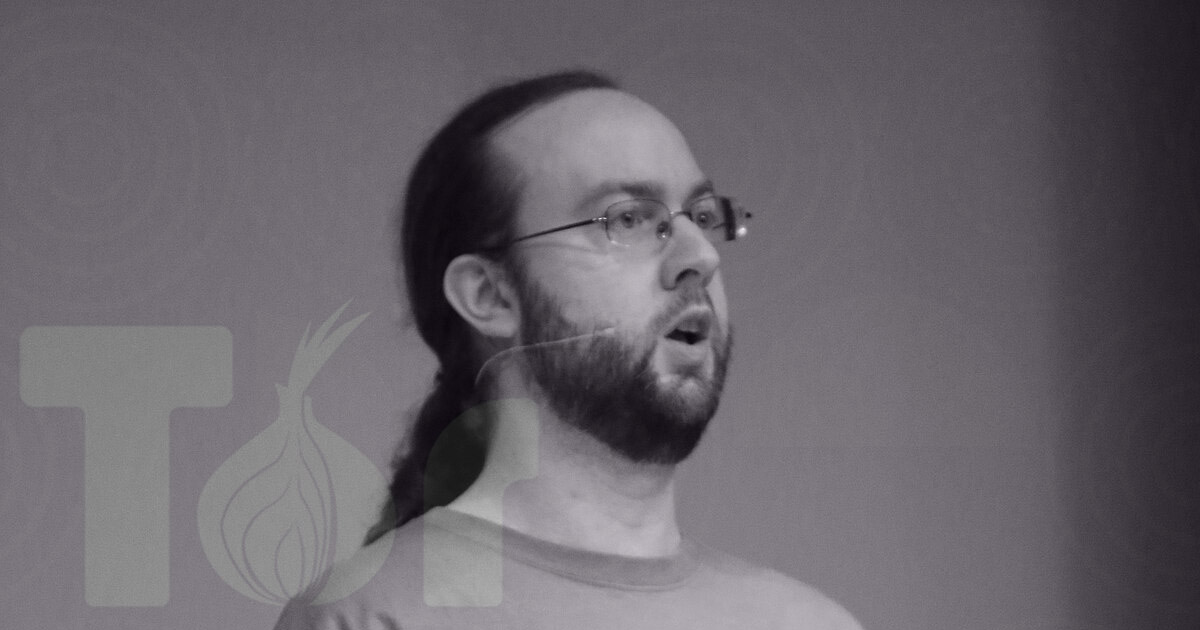
Tor did not survive because it was clever. Plenty of clever systems died quietly once pressure arrived. Tor survived because its builders refused to compromise when compromise was framed as responsibility. At the center of that refusal stands Roger Dingledine. While others treated anonymity as a feature to be balanced, negotiated, or selectively weakened, Dingledine treated it as infrastructure. Infrastructure does not bend without failing. If anonymity breaks once, it is broken forever.
From the moment Tor left academia and met the real internet, it existed in a hostile environment by default. Governments wanted access. Law enforcement wanted exceptions. Corporations wanted predictability and attribution. Each pressure came dressed as pragmatism, public safety, or common sense. Every one of them pointed toward the same destination, backdoors, selective trust, or weakened guarantees. Tor resisted all of it.
Building Tor for Everyone
Dingledine helped develop Tor in the early 2000s while at MIT, working alongside Paul Syverson and Nick Mathewson. What emerged was not just a protocol, but a threat model rooted in social reality. The core insight was simple and unforgiving. An anonymity network only works if it is used by many different kinds of people. Journalists alone are not enough. Activists alone are not enough. If only high risk users rely on a system, the system itself becomes a marker of intent. Ordinary users matter because they provide cover.
This principle shaped Tor’s architecture and its politics. Tor was never meant to be a special tool for dissidents operating in isolation. It was designed as a general purpose network where anyone could blend in. That decision explains both Tor’s resilience and its controversy. As surveillance expanded and profiling became ambient, Tor remained viable precisely because using it did not imply guilt. The moment anonymity signals intent, the system collapses under its own visibility.
Under Dingledine’s leadership, Tor evolved from a research prototype into a global network sustained by volunteers. Thousands of independently operated relays now carry traffic for millions of users across the world. No central authority decides who is legitimate or which use cases are acceptable. That decentralization is not an ideological flourish. It is the threat model. Centralized control would not only weaken security. It would make compromise inevitable.
Pressure to Compromise
From its earliest days, Tor attracted hostility. Some governments attempted to block it outright. Others sought softer approaches, pushing for legal hooks or technical accommodations. The framing rarely changed. Add safeguards. Add oversight. Add lawful access. Make Tor safe for us. Each proposal assumed that weakening the system could be done surgically, without consequences.
Dingledine consistently rejected that framing. There is no such thing as a safe backdoor. There is no such thing as lawful weakening. Any system that can be selectively broken can be broken universally. Once an exception exists, it becomes the attack surface. Tor’s credibility depended on never pretending otherwise, even when refusal carried political and reputational cost.
This position was not abstract or comfortable. Tor faced intense scrutiny after high profile criminal cases, intelligence leaks, and terrorism scares. Each crisis triggered renewed demands for cooperation and control. Each time, the answer was no. The project would explain its design. It would document its risks. It would harden its defenses. But it would not sabotage itself in the name of reassurance.
Public Enemy by Design
Tor’s refusal to compromise made it unpopular by default. It was labeled a criminal tool. Exit nodes were blocked. Service providers treated Tor users as hostile traffic. Abuse reports were weaponized to justify blanket exclusion. Rather than retreat or soften its guarantees, Dingledine made the case publicly and repeatedly that anonymity is not a crime, and that security tools cannot be judged by worst case misuse alone.
He argued that privacy protects journalists, abuse survivors, whistleblowers, and ordinary people trying to escape surveillance capitalism. He also argued something less comfortable and less often acknowledged. Law enforcement and intelligence agencies rely on anonymity when it suits them. Undercover work, source protection, and sensitive investigations all depend on the same properties Tor provides. The demand for backdoors was never about safety. It was about control.
Tor survived because it accepted being controversial. It did not chase legitimacy by weakening its guarantees or courting approval from institutions that wanted leverage. It allowed critics to exist and focused instead on users who needed it to work, not to be liked.
What Tor Made Possible
Tor enabled secure journalism under authoritarian regimes. It protected sources who would otherwise be exposed by metadata alone. It allowed citizens to bypass censorship and access information their governments tried to suppress. It gave people a way to exist online without being continuously profiled, scored, and tracked. These outcomes were not accidental side effects. They were the design goals.
As governments now push SIM binding, social media vetting, biometric identity, and mandatory attribution at every layer of the internet, Tor stands as proof that another path was possible. That path still exists only because Dingledine and others refused to make anonymity conditional, temporary, or revocable.
Tor is not perfect. It is slow. It is fragile. It is under constant attack. But it still exists. And it exists without a backdoor.
Blackout VPN exists because privacy is a right. Your first name is too much information for us.
Keep learning
FAQ
Who is Roger Dingledine
Roger Dingledine is a co founder of the Tor Project and one of the original architects of the Tor anonymity network.
Why is Tor considered important for privacy
Tor allows users to route traffic through a decentralized network that obscures origin and destination, protecting anonymity.
Did Tor ever include a backdoor
No. The Tor Project has consistently refused to add backdoors or special access mechanisms.
Why do governments oppose Tor
Tor limits surveillance, censorship and attribution, which conflicts with state monitoring goals.
Why is Dingledine considered influential
He combined technical leadership with public advocacy and refused to weaken Tor under sustained pressure.