
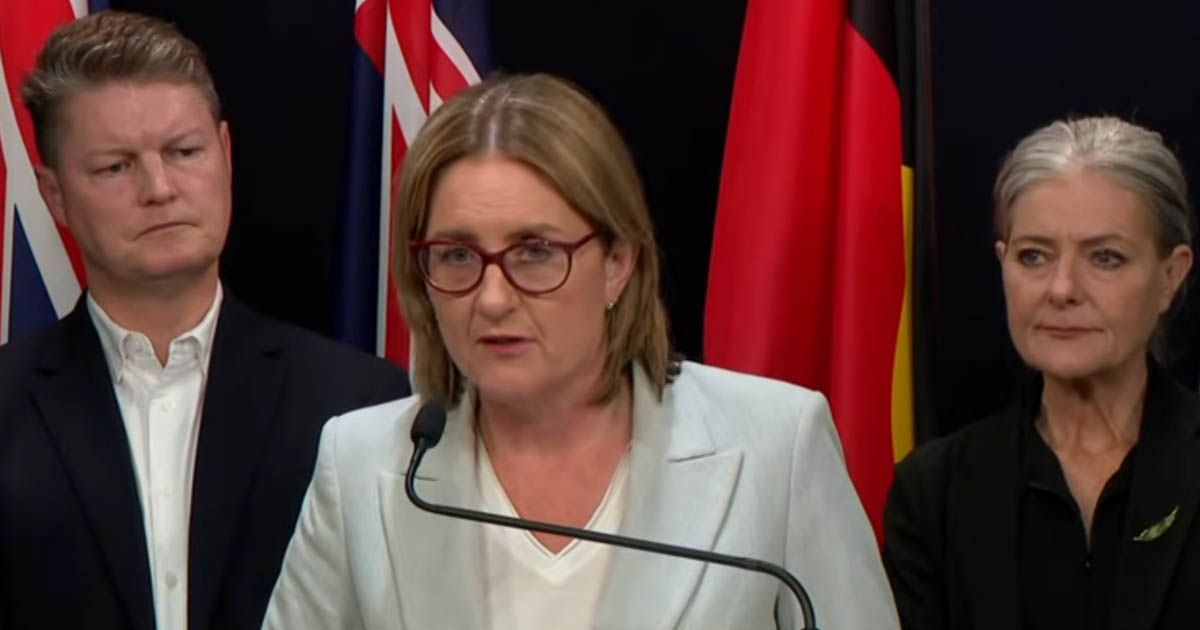
On December 22, 2025, Victorian Premier Jacinta Allan announced a five-point plan to combat antisemitism and violent extremism following the antisemitic terrorist attack at Bondi Beach that killed 15 people. The Government framed the attack as an assault on Jews and Australia's way of life. Instead of fixing known enforcement failures (especially since the perpetrators were already known to police), the response expands state power over speech, protest, and online anonymity.
Allan expressed a "profound sense of duty to stand with the Jewish community in its darkest hour," stating "We are acting to stop hate and anti-Semitism everywhere," and that the measures "support the Jewish community and our way of life. They belong to every Victorian and keep everyone safe." This is not protection. It is substitution. Speech control replaces policing competence.
The plan accelerates laws that punish speech based on whether someone feels offended, pressures platforms to expose anonymous users, and gives police powers to shut down protests during sensitive periods. The first pillar fast-tracks the civil anti-vilification scheme under the Justice Legislation Amendment (Anti-vilification and Social Cohesion) Act 2024 to April 2026. It allows VCAT claims for conduct a "reasonable person" might find hateful or severely ridiculing on protected attributes. The vague, feeling-based test targets online speech and holds platforms liable, including by forcing user identification if the accused cannot be found. Anonymous speech is treated as guilt by default. The Government is also removing the need for Director of Public Prosecutions consent in criminal vilification cases, with penalties up to five years imprisonment already in force since September 20, 2025.
The remaining pillars grant police unilateral powers to disperse protests after terrorist events (assuming assembly is a threat when dissent matters most), tighten an already strict gun regime, appoint a commissioner for extremism prevention programs, and embed coercive long-term controls: IHRA antisemitism definition, mandatory Holocaust education, workplace mandates, cultural guidelines, and an eminent council tracking compliance. The Act passed in early 2025. Supporters call it protection; critics see normalised speech policing and chilled rights. Some Jewish leaders note it misses explicit violence while sweeping lawful expression. The response sidesteps why known threats were not stopped and why intelligence failed. Terror justifies control, with democratic safeguards as the price.
Blackout VPN exists because privacy is a right. Your first name is too much information for us.
Keep learning
FAQ
When do Victoria’s civil anti-vilification laws start
The civil provisions commence in April 2026
Can online anonymity be overridden under these laws
Yes platforms may be compelled to identify users in vilification cases
Do the protest powers apply immediately after attacks
They apply for a defined period after designated terrorist events
What penalties apply for criminal vilification
Serious offences carry penalties of up to five years imprisonment
Were the attackers previously known to police
Yes authorities have acknowledged prior police awareness of the perpetrators