
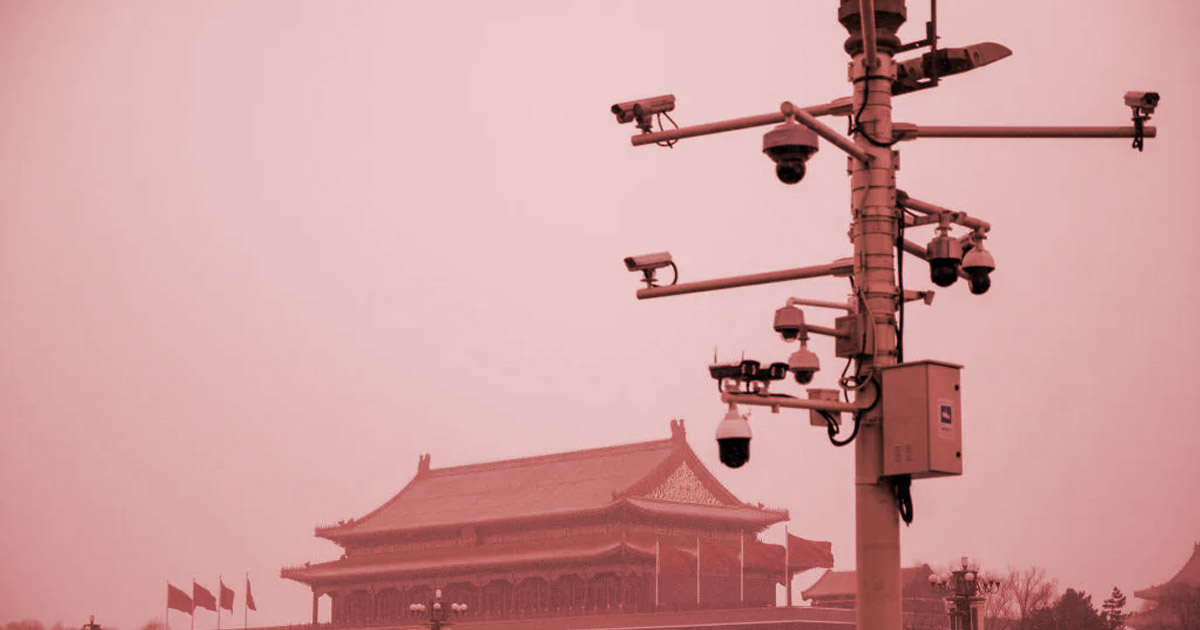
In China, artificial intelligence is already embedded into systems that monitor faces, voices, movements, and behaviour at population scale. These systems are not experimental. They are deployed, normalised, and enforced through law. The result is not ethical failure by accident. It is ethical irrelevance by design.
The paper The Party’s AI. How China’s New AI Systems Are Reshaping Human Rights documents how Chinese state agencies integrate AI into policing, governance, and social control. Written by human rights researchers examining real deployments, not theory, it makes one fact unavoidable. Ethical AI cannot exist where the state holds absolute power and citizens have no meaningful ability to refuse, challenge, or escape.
Ethical AI assumes consent
Every serious framework for ethical AI starts with consent. Data should be collected voluntarily. Individuals should understand how systems affect them. None of these conditions exist in China.
Biometric data collection is mandatory. Facial recognition cameras are embedded in streets, transport hubs, workplaces, and residential areas. Voiceprints are harvested through telecom infrastructure. DNA databases have been built through coercive health and security programs. Refusal is not an option. Participation is enforced by law and backed by punishment.
Consent is not missing because the system is immature. It is missing because consent would undermine control.
Accountability disappears behind algorithms
Ethics also requires accountability. Decisions must be explainable. Harm must be traceable to someone with authority. AI systems deployed by the Chinese state do the opposite.
The paper documents how automated risk scoring and behaviour analysis systems flag individuals for police attention, questioning, or detention. Once flagged, responsibility dissolves. Officials point to the system. The system is treated as neutral, objective, and unquestionable.
AI becomes a shield for power. It removes the need for justification and replaces it with technical authority. You are not detained because an officer decided so. You are detained because the system identified risk.
Ethics frameworks do not constrain outcomes
China publishes AI principles. It hosts conferences on responsible innovation. It promotes internal ethics guidelines. None of these documents limit what the state actually does.
The paper shows that when political objectives conflict with human rights, political objectives win. Social stability, national security, and ideological conformity override privacy, freedom of movement, and due process every time.
False positives are not considered failures. They are acceptable collateral. When repression is the goal, accuracy is secondary to coverage.
Xinjiang proves ethics are optional
No case illustrates this more clearly than Xinjiang. The Uyghur population became the testing ground for AI driven repression.
Authorities combined facial recognition, phone scanning, biometric databases, location tracking, and predictive analytics to identify so called suspicious behaviour. The criteria were broad and opaque. Growing a beard. Owning certain apps. Contact with relatives abroad.
Detention followed algorithmic suspicion. Ethics boards did not intervene. Oversight did not appear. The systems worked exactly as intended.
AI does not restrain power. It concentrates it.
The core myth of ethical AI is that technology can correct human abuse. The reality shown in the paper is simpler. AI amplifies whoever controls it.
When the state controls the data, the infrastructure, the laws, and the enforcement, ethics become decorative language. There is no appeal process against an algorithm that answers only to power.
This is not a uniquely Chinese risk. Chinese surveillance systems are exported. Their logic is studied. Their success at control is noted. Softer versions already appear in other countries under different branding.
Ethical AI does not fail in authoritarian systems. It never existed there in the first place.
Credit and source. This analysis draws on The Party’s AI. How China’s New AI Systems Are Reshaping Human Rights by human rights researchers examining state deployed AI systems in the People’s Republic of China.
Blackout VPN exists because privacy is a right. Your first name is too much information for us.
Keep learning
FAQ
What is the core argument of AI Ethics End Where State Control Begins
Ethical AI requires consent and accountability, which do not exist under authoritarian state control
Does China have AI ethics guidelines
Yes, but they do not limit state surveillance or enforcement practices in reality
Why is Xinjiang central to this issue
Xinjiang was used as a testing ground for AI driven surveillance and automated repression at scale
Is this problem limited to China
No, the technologies and governance models are being exported and adapted elsewhere
Can ethical AI exist without human rights protections
No, without enforceable rights and transparency ethics frameworks have no power