
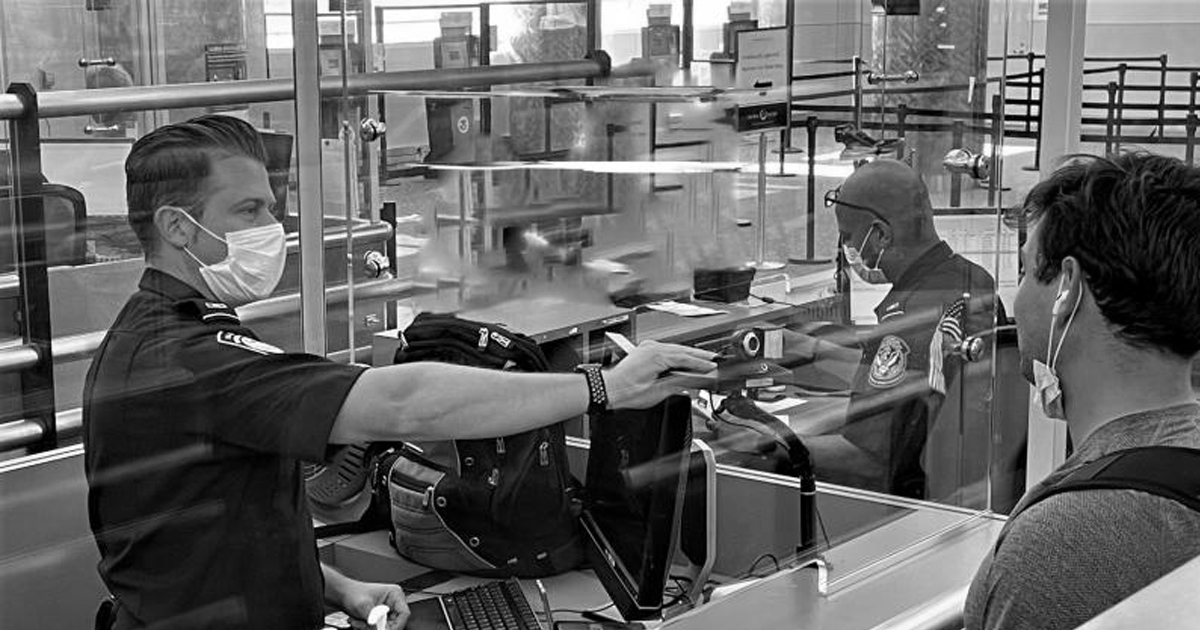
The United States is planning to require tourists from visa waiver countries to submit up to five years of social media history as part of the travel authorisation process. The proposal applies to visitors from countries like Britain, France, Germany and South Korea. These are not high risk jurisdictions. These are ordinary travellers seeking short visits of up to ninety days.
Alongside social media, applicants could be required to disclose email addresses from the past decade and detailed family information including names, birthplaces and residences of parents, partners and children. What was once a simple electronic authorisation is being turned into a deep personal data intake system. The mismatch between the length of stay and the scale of surveillance is impossible to ignore.
Five Years of Posts for a Plane Ticket
Under the current visa waiver system, travellers submit basic identity and contact information and receive approval valid for two years. Social media disclosure has technically existed as an optional field since 2016. What is changing now is how silence is interpreted. Immigration professionals expect the absence of social media accounts to be treated as a red flag rather than a privacy choice.
This creates a perverse incentive. People who limit their online presence, avoid major platforms or intentionally minimise digital footprints are more likely to be scrutinised. Privacy becomes suspicious by default. A ninety day holiday now comes with an expectation of radical transparency about years of online behaviour.
From Background Checks to Thought Checks
This proposal marks a clear shift in how border screening operates. Agencies are no longer focused on verifying concrete facts such as identity, travel history or criminal records. They are moving toward evaluating speech. Online posts, associations and expressions are being treated as indicators of intent, character or risk.
This is discretionary power without meaningful safeguards. Travellers have no clear visibility into how their posts will be interpreted, what criteria will be applied or how decisions will be reviewed. Denials can be issued without explanation. There is no appeal process that meaningfully addresses content-based judgments. For visitors with no legal rights inside the system, speech becomes a liability with no recourse.
Surveillance That Spreads
Border surveillance rarely stays contained. When one major country normalises large-scale data collection from travellers, others follow. What begins as an American policy quickly becomes a global expectation. Journalists, activists and minorities are disproportionately affected, but ordinary tourists feel the impact first through longer processing times, increased scrutiny and chilled expression.
Digital rights groups have repeatedly warned that social media screening has not proven effective at identifying serious threats. What it does reliably accomplish is the expansion of data collection and the normalisation of monitoring speech. The tourism industry has already raised concerns that these measures will discourage travel. That outcome is not a side effect. It is the predictable cost of treating movement as a privilege conditional on compliance.
A border that demands access to your online life is not defending safety. It is extending surveillance beyond its jurisdiction and into the private lives of people who have done nothing wrong. When governments treat expression as a risk factor, freedom of movement quietly erodes.
Blackout VPN exists because privacy is a right. Your first name is too much information for us.
Keep learning
FAQ
Who would be affected by this policy
Tourists from visa waiver countries including Britain, France, Germany and South Korea.
What information would travellers need to provide
Up to five years of social media history, email addresses from the past decade and detailed family information.
Is social media disclosure currently mandatory
It has been optional, but officials expect missing social media to be treated as suspicious under the new approach.
Does this policy improve security
Digital rights experts say social media screening has not proven effective at identifying serious threats.
Why is this concerning for privacy
It shifts border checks from verifying facts to judging speech and normalises mass data collection from innocent travellers.