
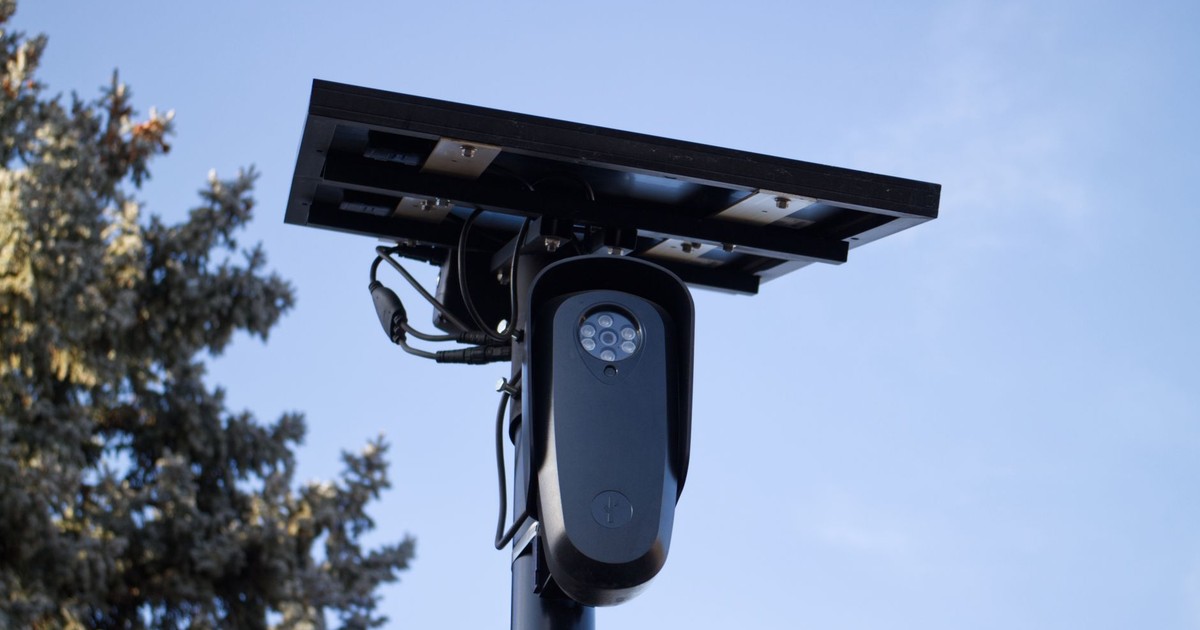
Flock Safety sells a simple pitch to city councils and police departments. Install our cameras, scan every license plate that drives past, and run searches whenever you need to. The company calls it public safety infrastructure. Last week showed what it actually is.
On October 3, Judge Sara Hill of the U.S. District Court for the Northern District of Oklahoma ruled that a Tulsa sheriff's deputy violated the Fourth Amendment by searching Flock's database for a driver's plate with no justification beyond the fact that it was from out of state. Hill suppressed everything the search led to, including 91 pounds of methamphetamine found in a later vehicle stop, as fruit of the poisonous tree. Her reasoning did not stop at this one deputy. She wrote that Flock is "a type of indiscriminate mass surveillance" that "collects information about all vehicles that pass by any network-connected camera at all times." Tracking someone's movements in public becomes unconstitutional, she found, once a system catalogs it indiscriminately and passively over an extended period. Flock is designed to run that way for every car, every day.
The ruling landed the same week Senators Bernie Sanders and Jeff Merkley, with Representative Alexandria Ocasio-Cortez, introduced the Ban Flock Act. The bill would bar federal agencies from using automated license plate readers, pause federal grant funding to any state or local government running a Flock contract, and let Americans sue the federal government over the tracking. Sanders framed the stakes as a choice about whether the country becomes a surveillance state where AI companies profit from the government tracking Americans' movements. The bill's backers did not have to reach for hypotheticals to make the case. Lindsey Isaacs, a Florida driver, was jailed in solitary confinement after a Flock camera misidentified her Dodge Durango as the vehicle in a fatal hit and run. Five Indianapolis police officers were charged the same week with abusing Flock access to track ex-partners and stalk strangers. A Kentucky officer was arrested after using the cameras to track his ex-girlfriend more than 2,000 times.
Flock's own chief legal officer, Dan Haley, said Americans' privacy should not depend on one vendor's good judgment, leadership or commercial incentives. He said it while defending the company. He is right, and it is an admission that the entire model runs on trust Flock cannot actually guarantee. The company does not control who gets access once a department signs a contract, and it has no way to stop an officer from running a plate to find out where his ex-girlfriend sleeps.
Three police dispatchers in Cheektowaga, New York were suspended that same week for misusing Flock data themselves. Texas Governor Greg Abbott pulled state funding from Flock's camera network over concerns about federal agencies, including ICE, drawing on the same nationwide lookup system local police use. State lawmakers in Oregon, Missouri and Texas are now drafting their own restrictions. None of these cases are hypothetical. Flock logs every plate, every time, everywhere its cameras are installed, and hands that log to whoever a department lets touch the database.
Flock answers a question nobody should be asking at scale, where has this car been. Once that question can be asked about any plate at any time, the answer belongs to whoever has access, whether that is a detective working a real case, a dispatcher checking on a neighbor, or an officer stalking an ex. The company's defense that it cannot guarantee good judgment on the other end is the entire indictment. A system that depends on the discretion of every person who can log in is a liability waiting for someone to use it the way it was built to be used.
Blackout VPN exists because privacy is a right. Your first name is too much information for us.
Keep learning
FAQ
What did the federal judge actually rule
Judge Sara Hill ruled a warrantless Flock plate search by a Tulsa sheriff's deputy violated the Fourth Amendment and suppressed the evidence that followed, including 91 pounds of methamphetamine found in the resulting search.
What would the Ban Flock Act do
It would bar federal agencies from using automated license plate readers, pause federal grant funding to any state or local government with a Flock contract, and let Americans sue the federal government over the tracking.
Were Flock cameras actually misused by police
Yes. Five Indianapolis officers were charged with using Flock data to track ex-partners and stalk strangers, a Kentucky officer tracked his ex-girlfriend over 2,000 times, and three Cheektowaga dispatchers were suspended for misusing the data.
Why did Texas pull funding from Flock
Governor Greg Abbott cut state funding over concerns that Flock's nationwide lookup network gives federal agencies, including ICE, access to local license plate data.
Does a VPN protect against license plate tracking
No. A VPN protects your internet traffic, not physical movement captured by roadside cameras. Reducing exposure to systems like Flock requires limiting unnecessary driving through camera-heavy areas and supporting local bans, since the tracking happens independently of anything on your phone or network.