
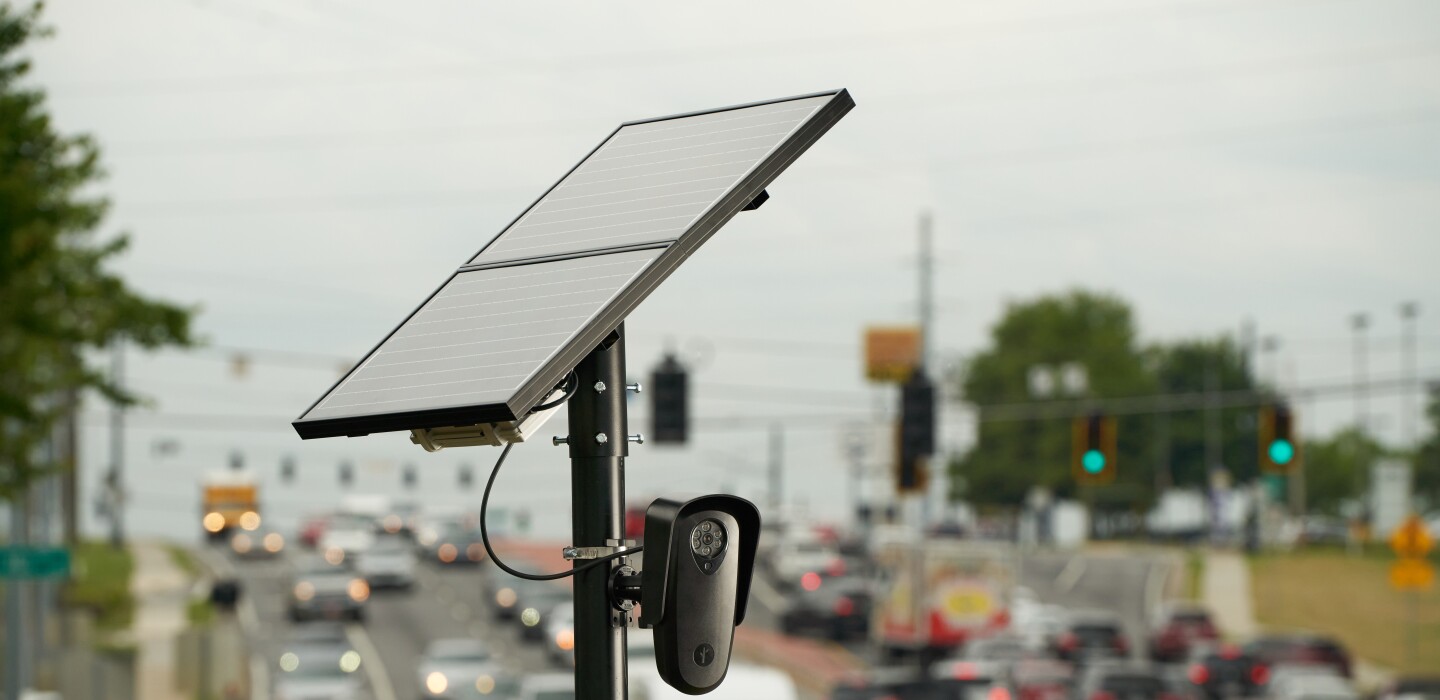
Flock Safety, based in the United States, has built a private surveillance empire while posing as your friendly neighbourhood watch. They wrap themselves in community language and public safety talking points, then wire entire towns into police data farms behind the scenes. Tens of thousands of cameras now sit on streets, highways, and driveways with no real public debate. No permission. No vote. No opt out. Fear is the product. “Safety” is just the branding on the box.
How Flock Safety's Surveillance Network Works
These cameras do far more than read license plates. They catalogue your car as an object that can be tracked forever. Colour, dents, stickers, roof racks, rust patches, company branding, all of it is quietly logged. Every scan is timestamped, geolocated, indexed, and uploaded to Flock's servers. They claim the data lives for "30 days" and that communities "own the data," but that is marketing language, not a safeguard. Once the footage is in their system, broad contracts and law enforcement carve outs give Flock and its government partners room to hold it, share it, and leak it the second a badge shows interest.
Police departments get a wall of free eyes pointed at every road in and out of town. Homeowners Associations get to pretend they are doing something noble about crime. Flock gets what it really wants, which is a nationwide search net that it controls from a central dashboard. With a few clicks, a cop in Texas can hunt for a plate scanned in Boston or Sacramento or anywhere else in the network. No warrant. No judge. No respect for jurisdiction. Your local "community camera" quietly becomes a remote control checkpoint aimed at your life by strangers thousands of kilometres away.
The privacy promises around encryption and retention limits are mostly cover. The system is designed from the ground up to share and to leak. Data does not stay local to your town. It flows into a central pipeline and spreads across agencies that plug into it. Every ordinary drive to work, to school, to a clinic, or to visit a friend is logged as pre filed evidence, ready to be pulled up and replayed whenever someone with a login feels curious or wants a new target.
Real-World Abuse and Privacy Violations
Abuse is not a distant risk. It is already happening. In Texas, police used a search tag written as "had an abortion search for female" to hunt a patient through this kind of system, and Flock tried to spin it as a welfare check until records exposed the truth. Rogue officers have stalked ex partners. Departments have pointed cameras at mosques. Protesters, gun owners, and activists have been flagged, tracked, or quietly doxxed. The technical security is also weak. Live camera feeds have leaked online, and one compromised password is enough to expose entire communities to stalkers, data thieves, or anyone willing to pay for access.
The scale itself is the crime. Well over ninety nine percent of plates in these databases belong to innocent people who have done nothing wrong. These systems flip that reality around and treat everyone as a suspect just for driving. Courts are starting to catch up. The Carpenter decision recognised that mass location tracking belongs behind a warrant wall, and judges in states such as Massachusetts and Virginia have flagged Flock style dragnets as unconstitutional. Police agencies mostly ignore the warning. The machine keeps running because it is convenient and politically useful.
Communities are pushing back. Cities and towns across the United States have torn out Flock cameras or refused to renew contracts after protests, FOIA requests, and independent audits revealed how often outside agencies were tapping so called local data. Austin cancelled its deal after discovering backdoor access. Suburbs in Illinois, New York, Washington, Oregon, Arizona, North Carolina, and elsewhere have paused deployments, let contracts expire, or forced removals once residents saw how aggressively Flock cameras were being used by ICE, CBP, and other outside forces. When activists mapped camera locations and Flock tried to respond with legal threats, digital rights groups like the EFF hit back and won. Every time sunlight hits the system, the “safety” story falls apart.
Flock turned neighbourhoods into rolling checkpoints and made residents pay for their own tracking. The grid is already live. No meaningful consent was ever asked for. It takes nothing more than a login and a search box for someone you have never met to start pulling on the strings of your daily movements. That is not safety. That is population level control dressed up as community care.
Blackout VPN exists because privacy is a right. Your first name is too much information for us.
Keep learning
FAQ
What is Flock Safety?
Flock Safety is a private surveillance company that sells automated license plate reader systems to police, councils, and neighbourhood groups. Their cameras collect detailed records of vehicles and share that data widely across agencies.
What do Flock cameras actually collect?
They capture license plates along with vehicle colour, make, dents, stickers, roof racks, and other identifiable markers. Every scan is timestamped, geolocated, and uploaded to Flock’s servers for cross-agency searches.
Who can access the data?
Police departments and partner agencies across the country can search the footage. A cop in one state can look up scans from another with no warrant or local oversight.
Has the system been abused?
Yes. FOIA records show officers stalking ex partners, targeting protesters, surveilling mosques, and even searching for abortion patients. Live feeds have leaked online due to weak security.
Are communities pushing back?
Many US cities have cancelled contracts or forced removals after discovering backdoor access, ICE lookups, and unconstitutional searches. Public pressure, FOIA exposure, and digital-rights groups have driven the backlash.
Why does this matter for Australians?
Surveillance tech sold overseas often ends up adopted locally. Understanding Flock’s model helps Australians recognise similar risks before they spread here.