
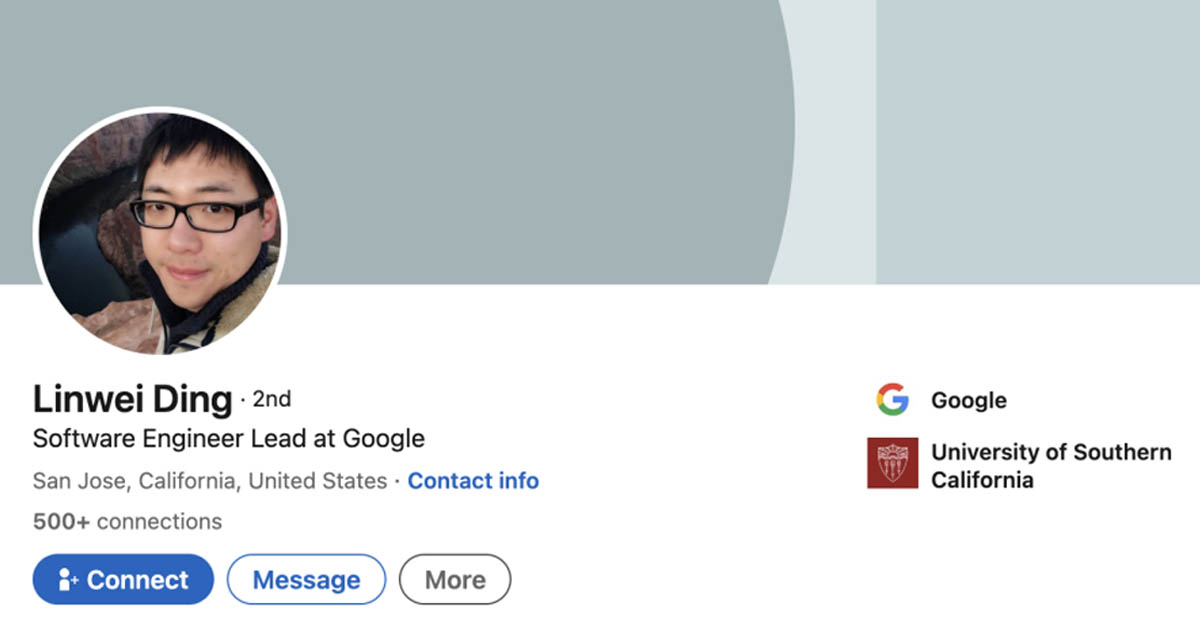
Former Google engineer Linwei Ding was convicted on January 28, 2026 of stealing over 2,000 pages of confidential files containing Google's AI trade secrets and transferring them to Chinese companies. A federal jury in San Francisco found him guilty on fourteen counts after an 11-day trial. Seven counts of economic espionage, each carrying a maximum 15-year sentence. Seven counts of theft of trade secrets, each carrying a maximum 10-year sentence. Ding worked on Google's supercomputing infrastructure that powers its AI products. Between May 2022 and April 2023, he uploaded more than 2,000 pages of confidential information to his personal Google Cloud account. The stolen files contained detailed specifications for Google's hardware infrastructure and software platforms that allow Google's supercomputing data centers to train and serve large AI models.
The trade secrets included the architecture and functionality of Google's custom Tensor Processing Unit chips and systems, Graphics Processing Unit systems, the software that allows the chips to communicate and execute tasks, and the software that orchestrates thousands of chips into a supercomputer capable of training and executing AI workloads. Ding also stole details about Google's custom-designed SmartNIC, a network interface card used for high-speed communication within Google's AI supercomputers and cloud networking products. While stealing Google's technology, Ding was secretly working for two Chinese tech companies without disclosing either relationship to Google. Around June 2022, he was in discussions to become Chief Technology Officer for an early-stage technology company based in China. By early 2023, he was founding his own AI and machine learning company in China and acting as its CEO.
In presentations to potential investors, Ding claimed he could build an AI supercomputer by copying and modifying Google's technology. He pitched Chinese investors using the stolen trade secrets, calling out China's national policies prioritizing AI development and innovation. In late 2023, Ding applied for a government-sponsored talent plan in Shanghai. His application stated he planned to "help China to have computing power infrastructure capabilities that are on par with the international level." The Chinese government runs talent plans to recruit individuals who can contribute to China's economic and technological growth. Evidence at trial showed Ding intended to benefit two entities controlled by the Chinese government by assisting with the development of an AI supercomputer and collaborating on research and development of custom machine learning chips. Ding downloaded the stolen Google trade secrets to his personal computer in December 2023, less than two weeks before he resigned from Google. He systematically transferred the files over more than a year while building competing Chinese companies with the stolen technology and collecting his Google salary the entire time.
This marks the first-ever conviction on AI-related economic espionage charges. Assistant Attorney General for National Security John Eisenberg said "This conviction exposes a calculated breach of trust involving some of the most advanced AI technology in the world at a critical moment in AI development. Ding abused his privileged access to steal AI trade secrets while pursuing PRC government-aligned ventures. His duplicity put U.S. technological leadership and competitiveness at risk." FBI Assistant Director Roman Rozhavsky added "In today's high-stakes race to dominate the field of artificial intelligence, Linwei Ding betrayed both the U.S. and his employer by stealing trade secrets about Google's AI technology on behalf of China's government. Not only does this case mark the first-ever conviction on AI-related economic espionage charges, but it also demonstrates the FBI's unwavering dedication to protecting American businesses from the increasingly severe threat China poses to our economic and national security."
Ding was originally indicted in March 2024. A superseding indictment in February 2025 described seven categories of trade secrets stolen by Ding and added the additional charges. The case was prosecuted by the U.S. Attorney's Office for the Northern District of California and the Justice Department's National Security Division. The FBI's San Francisco Field Office investigated. Ding is scheduled to appear at a status conference on February 3, 2026. Sentencing has not yet been scheduled. He faces a maximum combined sentence of 175 years in prison across all fourteen counts.
Economic espionage charges are particularly serious because they require proving the defendant knowingly stole trade secrets intending to benefit a foreign government or foreign entity. The jury's guilty verdict on all seven economic espionage counts means they concluded Ding deliberately took Google's AI technology to help Chinese companies and the Chinese government compete against American firms. The stolen technology represents years of Google's engineering work building infrastructure needed to train and deploy large AI models at scale. Google's Tensor Processing Units power services like Google Search, Gmail, and Google Translate. The chip architectures, cluster management software, and deployment processes Ding stole give whoever possesses them a significant head start in building competing AI infrastructure.
Google cooperated with the investigation after detecting suspicious file transfers. The company's internal security systems flagged the uploads to Ding's personal Google Cloud account. This triggered the investigation that uncovered both the theft and Ding's undisclosed employment with Chinese AI firms. The case raises questions about access controls at major tech companies. Ding had legitimate access to trade secrets as part of his job, but he was able to upload thousands of pages of sensitive files to external cloud storage over 12 months before detection. Google's systems eventually caught him, but only after he'd already transferred over 2,000 pages of confidential files and spent a year building Chinese companies with that stolen technology. Ding's conviction follows a pattern of Chinese nationals working at U.S. tech companies being charged with stealing AI and chip technology. The Justice Department has made prosecuting these cases a priority as part of efforts to counter nation-state economic espionage. Ding won't be sentenced until after the February 3, 2026 status conference, but the conviction on all fourteen counts makes a lengthy prison sentence likely. He faces up to 175 years in federal prison for stealing AI trade secrets while building competing Chinese companies with that stolen technology.
Blackout VPN exists because privacy is a right. Your first name is too much information for us.
Keep learning
FAQ
What did Linwei Ding steal from Google?
Ding stole over 2,000 pages of confidential files containing Google's AI trade secrets including Tensor Processing Unit chip architectures, Graphics Processing Unit systems, supercomputer orchestration software, and custom SmartNIC network interface card designs used in Google's AI infrastructure.
What was Ding doing with the stolen technology?
Ding was founding his own AI and machine learning company in China while serving as CEO. He pitched Chinese investors claiming he could build an AI supercomputer by copying Google's technology and applied for a Chinese government talent plan to help China achieve computing power on par with international levels.
How long did the theft go undetected?
Ding systematically uploaded files to his personal Google Cloud account between May 2022 and April 2023, over 12 months before Google's internal security systems flagged the suspicious transfers and triggered an investigation.
What charges was Ding convicted on?
Ding was convicted on 14 counts total. Seven counts of economic espionage carrying maximum 15 years each and seven counts of theft of trade secrets carrying maximum 10 years each. He faces a combined maximum sentence of 175 years in prison.
Is this the first AI espionage conviction?
Yes. This marks the first-ever conviction on AI-related economic espionage charges. The Justice Department has made prosecuting theft of AI and chip technology a priority as part of efforts to counter Chinese nation-state economic espionage.