
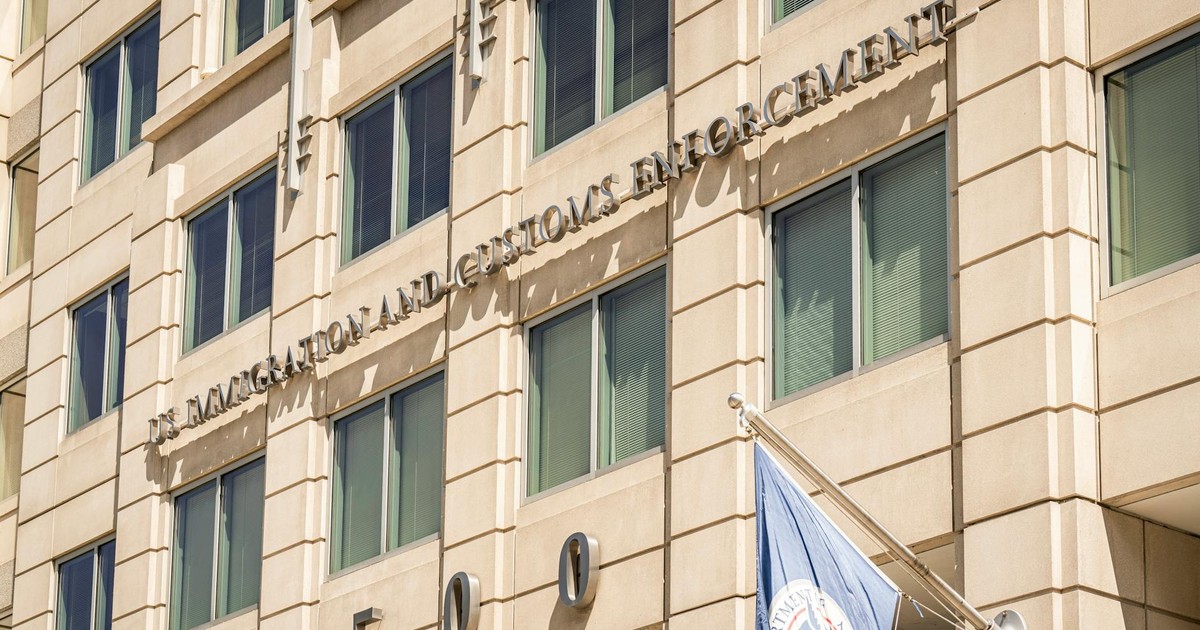
ICE wants smart glasses for its officers. A Department of Homeland Security official and a person who attended a recent conference described the plans to 404 Media. The glasses are designed to supplement Mobile Fortify, the agency's existing face recognition app, which ICE and Customs and Border Protection officers already use to scan faces and query government databases in the field.
Mobile Fortify is the phone-based version of the same system. An officer holds up a device, captures a face, and gets back an identity check against federal records. Earlier 404 Media reporting found that DHS documents tell field staff subjects cannot refuse to be scanned. Glasses change the ergonomics of that scan. The officer no longer needs to hold up a device. The act of looking at someone becomes the act of scanning them.
The database is doing the work in both cases. The wearable just shortens the loop. Every reduction in friction between an officer's attention and a federal record lookup is a reduction in the moments where consent could even theoretically be asserted, refused, or noticed. There is no part of this where the subject participates.
The glasses sit inside the Trump administration's mass deportation campaign, where ICE has been pushed to scale enforcement faster than its existing tooling allows. Mobile Fortify was the first answer. The glasses are the next answer. Each step compresses the workflow further. Glasses skip both the time and the visibility of a handheld scan. The officer can run the query in the half-second of looking at someone.
For anyone in front of an ICE officer, the practical effect is that being looked at and being processed by a federal identification system are now the same event. Citizenship status, immigration history, and any prior contact with the system flow back into the officer's view before any conversation has happened. The interaction starts with the result of a database query, not with an exchange.
None of this requires new surveillance to exist. The face recognition tooling is already deployed. The federal identity databases are already populated. The legal scaffolding that lets officers scan without consent is already in place. Glasses are a delivery mechanism for surveillance infrastructure that ICE already runs. Each new form factor expands where and how often the existing system gets used.
404 Media's sources did not name a vendor or give a deployment timeline. There is no public procurement record, no public consultation, no published civil liberties review. The conference at which the plans were discussed was not public. Mobile Fortify itself was built and rolled out the same way. ICE describes these as internal tools and treats their existence as an implementation detail rather than a policy question.
Any expansion of surveillance hardware is downstream of decisions made years ago, when the underlying databases were built and the rules around scanning without consent were settled. The hardware does what it was always going to do once that system existed. Anyone who wants less exposure has to focus on the system underneath, not the latest piece of hardware bolted to the officer's face.
Blackout VPN exists because privacy is a right. Your first name is too much information for us.
Keep learning
FAQ
What is Mobile Fortify
Mobile Fortify is the face recognition app used by ICE and Customs and Border Protection officers to scan faces in the field and check federal identity databases.
Can someone refuse to be scanned by Mobile Fortify
According to DHS documents reported by 404 Media, no. Officers are told subjects cannot decline a scan.
When will the smart glasses be deployed
There is no public timeline. 404 Media's sources described the plans at a recent conference but did not give a deployment date.
Who makes the glasses
No vendor has been named publicly. The plans were at the development stage when described to 404 Media.
Why does the form factor matter
Glasses make face scanning hands-free and invisible. The officer no longer needs to hold up a phone, so the moment of being scanned is harder for the subject to notice.