
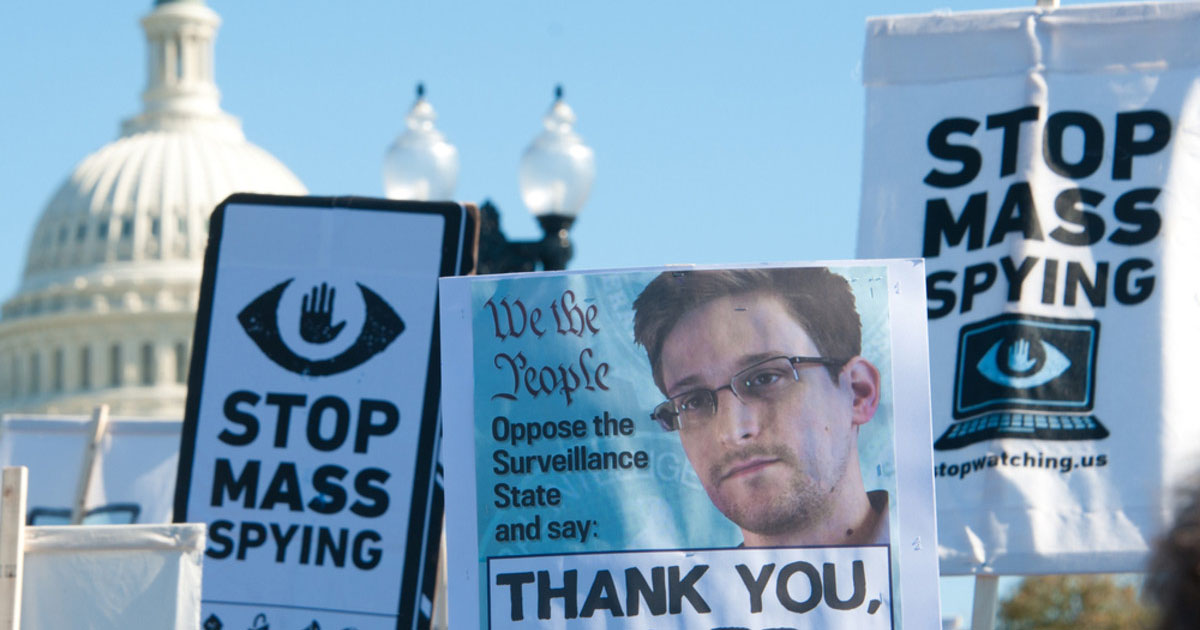
Snowden warned us. A decade later, governments push for digital IDs, biometric tracking, device-side scanning and AI-driven monitoring. The tools changed. The lesson did not. If we do nothing, the next Snowden won't be exposing a dragnet. They'll be exposing a full profile of every person on earth.
What Snowden Exposed
Edward Snowden didn't stumble into history. He walked straight into it with his eyes open. In 2013 he took one look at what the NSA was doing behind closed doors and decided the public had the right to know. Not in twenty years. Not after another whitewashed investigation. Right then.
The documents he released proved that mass surveillance wasn’t a conspiracy theory. The NSA and its partners were monitoring global communications on a scale no one outside the intelligence world imagined. Emails, chats, search histories, phone metadata. Entire networks treated as fair game. All of it collected under secret interpretations of law that the public never agreed to.
Worse, officials had lied about it. They told Congress they didn’t collect data on Americans. Snowden’s files shredded that line. Programs existed specifically to do exactly that. The government built a system that watched everyone while telling everyone the opposite. When he exposed it, he forced the country to confront what happens when secrecy becomes a shield for wrongdoing instead of security.
And some of these programs weren't just hidden. They were illegal. Courts eventually ruled the NSA's bulk phone records program went beyond what the law allowed and likely violated the Constitution. Judges said outright that officials defending the program hadn't told the truth about how useful it was. The first program Snowden exposed was illegal and never delivered the results the government promised. His instincts were right.
Why Snowden Went Public
Critics say he should have gone through internal channels. Snowden did raise concerns inside the system, and the government denies it because admitting otherwise would blow up their whole story. Every NSA employee before him who tried to blow the whistle the proper way was crushed. Careers destroyed. Lives upended. Zero reform. Internal channels were a dead end by design. Snowden understood that reporting abuses to the same people running them would do nothing but bury the evidence and destroy him quietly. So he went public, knowing exactly what it would cost.
They also call him a traitor because he ended up in Russia. The reality is less dramatic. He was on his way to Latin America when the US cancelled his passport mid-flight. Moscow wasn’t a plan. It was a holding cell. The documents stayed with journalists, not in his luggage. To this day, there is no credible evidence he handed anything to any foreign government. The leaks went to the public, not an enemy state.
The fearmongering that he helped terrorists also falls apart. Oversight boards, courts and intelligence reviews found that the bulk spying he exposed had almost no unique impact on stopping attacks. Meanwhile, the reforms sparked by his leaks were real. Laws changed. Courts tightened oversight. Agencies that had operated in the dark were forced to answer questions they'd avoided for years.
Snowden's Impact on Privacy and Tech
His influence hit tech even harder. After 2013, encryption went mainstream. Messaging apps locked down by default. Apple hardened iPhones. Browsers pushed stronger security. People finally realised how much of their lives they'd handed over without a second thought. Snowden didn't invent privacy tech, but he made ignoring it impossible.
Public attitudes shifted too. Before Snowden, the standard line was "I have nothing to hide." After Snowden, people understood the real issue. Privacy isn’t about hiding something. It’s about agency. It’s about refusing to live in a world where governments get a perfect view of your life while hiding their own actions behind classified curtains.
He’s still in exile, but his impact hasn’t faded. Illegal programs ended. New safeguards were built. The global conversation changed. People who never cared about surveillance suddenly understood the stakes. Even officials who condemn him admit he forced the debate their agencies avoided for decades.
Edward Snowden broke the law to expose something far worse. He reminded the world that democracies rot when the public is kept in the dark and the state operates unchecked. He forced accountability onto an apparatus that had none. A decade later we’re still dealing with the fallout, but at least we know what we’re up against.
Blackout VPN exists because privacy is a right. Your first name is too much information for us.
Keep learning
FAQ
Did Snowden expose illegal programs
Yes. Courts ruled the NSA phone records dragnet unlawful and outside what the law allowed.
Did Snowden harm national security
There is no evidence of concrete harm. Oversight bodies found the exposed programs were ineffective.
Did Snowden try internal channels
Yes, though the government denies it. Contractors had no real protection and prior whistleblowers were punished. Internal channels were not safe.
Did Snowden give data to foreign governments
No credible evidence supports that. He left the documents with journalists.
What changed after the leaks
Surveillance laws were reformed, oversight increased and encryption became mainstream.