
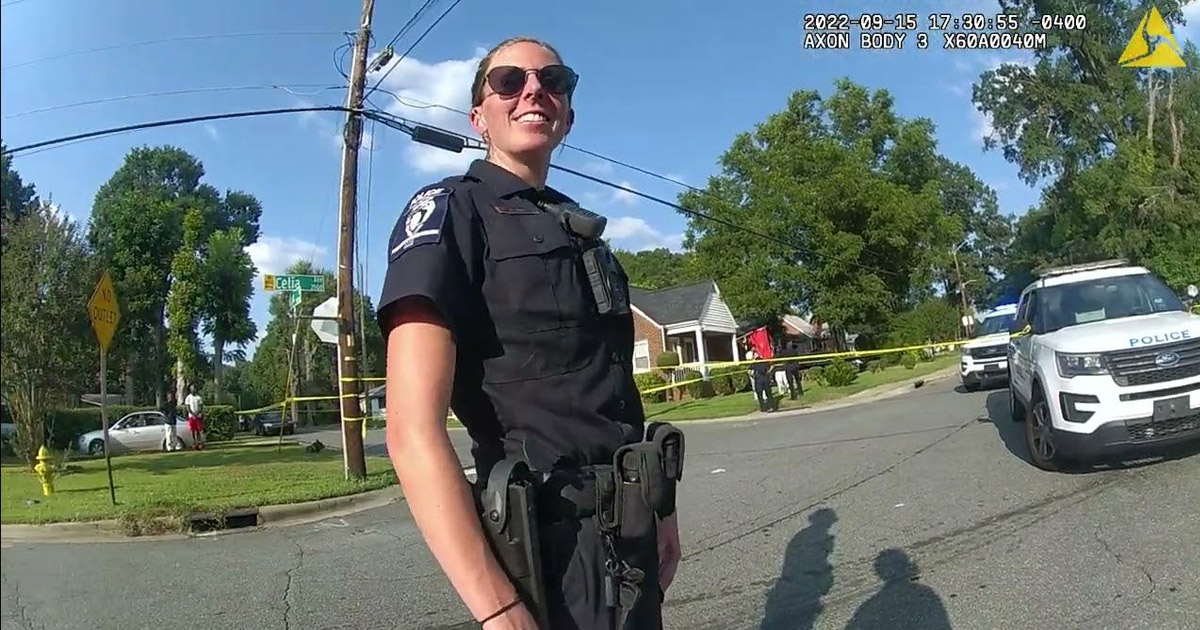
Axon has crossed a line it once claimed it would not cross. The company is now testing face recognition on its body worn cameras, starting with a live deployment inside the Edmonton Police Department in Canada. Up to 50 officers will carry the new devices. The cameras scan faces against police databases as officers move through the city. Edmonton is the first force in the world to field this version of Axon’s hardware.
The trial is being described as a proof of concept instead of a deployment, but the function is the same. Every face that enters an officer’s field of view is processed. Edmonton Police say the system checks for people with prior warnings or serious outstanding warrants. Officers will not receive instant alerts during the experiment. Matches will be reviewed after the fact. Delayed review does not change the core function. It still builds a searchable biometric record of everyone the cameras capture.
Body cameras are the perfect input source for this kind of system. They are close to faces. They run for long stretches. They collect footage in environments fixed cameras cannot reach. When face recognition sits on top of that footage, casual encounters become data extraction. Police do not need suspicion. They only need proximity. The technology does the rest.
Face recognition has a documented record of misidentifying people, especially in real world conditions. Wrong matches have already produced wrongful arrests in other jurisdictions. Adding this technology to body cameras increases the stakes because the footage is tied to officer reports, incident histories, and backend police software. A wrong identification becomes a thread that investigators pull on. By the time a mistake is corrected, the damage is done.
Axon knows the risks. Its own ethics board raised concerns in 2019 and recommended against adding face recognition to body cameras. Axon publicly agreed. That position did not last. The company continued researching the capability and is now testing it with a live police partner. When a technology company with thousands of law enforcement clients decides a feature is ready, it does not stay experimental for long.
This trial also shows how the surveillance industry now operates. Vendors build large ecosystems. Axon controls body cameras, cloud evidence systems, drones, and Fusus, the camera integration platform that merges public and private feeds into real time dashboards. Once a vendor controls the stack, adding new capabilities is easy. The oversight process that should intervene usually fails because the new feature arrives as a software update rather than a policy proposal.
The question is not whether face recognition works well. The question is who gets to decide when it appears in public spaces. Right now, that decision is being made by a private company that builds police weapons and surveillance platforms. Cities that adopt the hardware inherit whatever new abilities the vendor ships next year.
What Edmonton is doing today will spread if it goes unchallenged. Police departments rarely walk away from new capabilities. Vendors never remove them. Surveillance technologies do not retreat. They accumulate until someone forces them to stop.
Face recognition on body cameras is not a safety tool. It is a permanent expansion of police visibility into everyday life. Once that switch is flipped, the only thing that grows is the database.
Blackout VPN exists because privacy is a right. Your first name is too much information for us.
Keep learning
FAQ
Why is Axon testing face recognition now
Axon paused development in 2019 after ethics concerns but continued research privately and is now trialing it with Edmonton Police.
How many officers are involved
Up to 50 Edmonton Police officers are carrying the face recognition enabled cameras.
Does the system run in real time
Not during the trial. Matches are reviewed after the fact which still builds a biometric record of everyone captured.
What are the risks of face recognition on body cameras
Misidentification, expanded police visibility, automatic watchlist creation, and linkages to other police databases.
Why is this trial significant
It marks the first live use of Axon’s face recognition cameras and sets a precedent for widespread adoption if left unchallenged.