
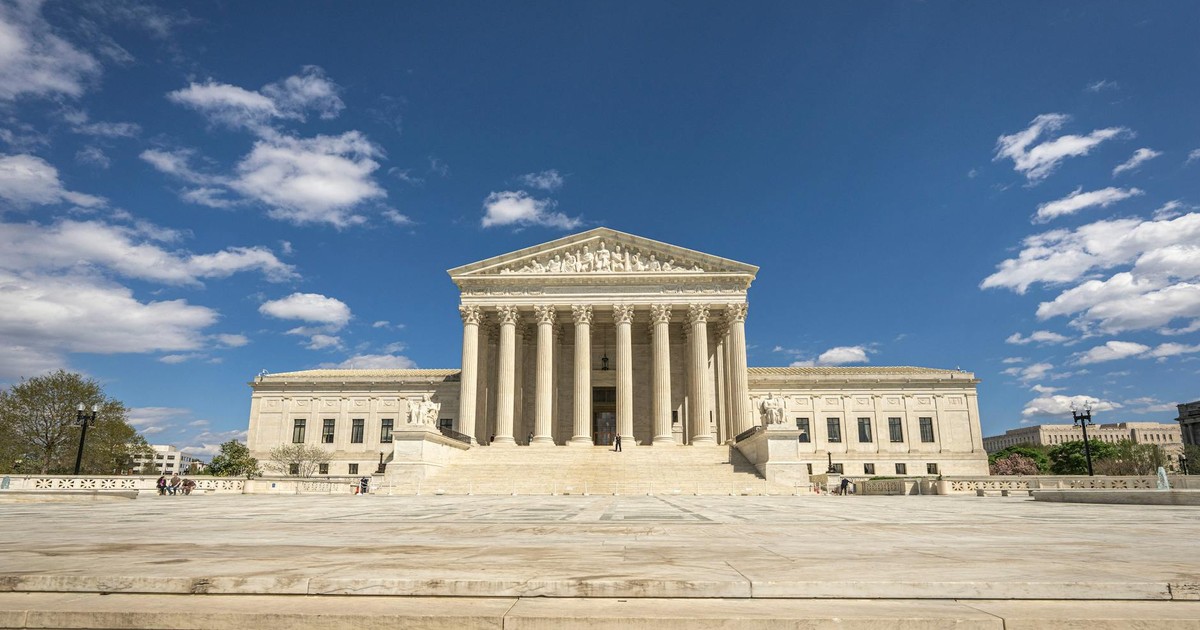
On 27 April 2026 the Supreme Court heard oral arguments in Chatrie v United States. The case asks whether geofence warrants, which order Google to hand over every device that pinged a chosen map area during a chosen window, qualify as searches under the Fourth Amendment. The government argued they do not. Several justices spent the hearing signalling they disagree.
Justice Neil Gorsuch and Justice Sonia Sotomayor, who agree on almost nothing else, both pressed the same point. If police can pull every phone in a defined zone without a warrant, what stops them from pulling photos and emails on the same theory. Neither justice sounded persuaded by the answer. The Court is now likely to rule that geofence searches require a warrant, with narrow rules for how those warrants can be drawn.
Google has reported a geofence warrant covering 2.5 square miles of San Francisco for more than 48 continuous hours. Another warrant would have returned location data for over 3,000 users inside a 489 acre zone that contained a mosque, residential apartments, private homes, a park, public roads, and a university campus. Each of those people became a person of interest because their phone happened to be powered on inside the box drawn by an investigator. None of them were suspects. Most never knew they were searched.
Geofence warrants search a population, not a suspect. They run against a database Google built by logging precise location continuously for everyone signed in to a Google account. Police call it a warrant because a judge signs it. The architecture is a dragnet.
The Court already saw a version of this in 2018. Carpenter v United States held that police needed a warrant before pulling seven or more days of historic cell-site location data from a phone carrier. That ruling treated long-term location history as constitutionally protected even when a third party held it. Geofencing inverts the question. Instead of asking what one phone did over time, it asks what every phone did in one place. The legal logic of Carpenter was visibly insufficient to stop that, and eight years passed before the Court took a case that forced the issue.
Geofence warrants scaled in those eight years. Google built dedicated tooling to process them. Police departments across the country wrote them as a routine investigative step. The technique was used to identify January 6 participants, protest attendees, and bystanders to crimes who happened to walk through the wrong block. By the time the Court started asking whether this was a search, it had already become standard procedure.
Google retains continuous location history by default for any account with Location History or Web and App Activity enabled. The data is generated by phones that users carry voluntarily, but the retention is a business decision, and the searchable index built on top of it is what turned a theoretical query into routine police infrastructure. Apple does not maintain an equivalent searchable store of all device locations. The dragnet ran on Google because Google built the warehouse the dragnet needed.
A favourable ruling will narrow how police can issue these warrants. It will not delete the location histories already collected, will not stop the next platform from rebuilding the same store under a different label, and will not reach the parallel commercial market in location data sold by ad-tech brokers, which police already buy from when warrants get inconvenient. The Court is patching one path to a database that should never have been assembled.
Data that is retained becomes searchable. Searchable data becomes evidence against the people it describes, including people who never did anything wrong. Turning off Location History, declining always-on telemetry, and using tools that do not log continuous position is what removes a phone from the next 489 acre box an investigator decides to draw.
Blackout VPN exists because privacy is a right. Your first name is too much information for us.
Keep learning
FAQ
What is a geofence warrant
A geofence warrant orders a company, almost always Google, to hand over every device whose location history placed it inside a defined map area during a defined time window. It returns data on everyone in the zone, not on a named suspect.
What did the Supreme Court signal in Chatrie v United States
Multiple justices indicated geofence searches likely require a warrant under the Fourth Amendment. The Court has not issued a final ruling, but the questioning suggested it will reject the government's position that geofencing is not a search.
How is this different from Carpenter v United States
Carpenter required warrants for seven or more days of historic cell-site location data on one phone. Geofencing reverses the question and asks what every phone did in one place, which Carpenter did not directly address.
Does turning off Location History stop geofence searches
Disabling Google Location History and Web and App Activity removes most account-level location logging that fuels geofence warrants. It does not stop carrier-level location data, app-level tracking, or commercial location brokers from holding records about the same device.
Will a warrant requirement end dragnet location surveillance
No. A warrant requirement narrows one path to one database. Police can still buy commercial location data from ad-tech brokers without a warrant, and other platforms can rebuild the same searchable store under different labels.